Social media ban for under-15s: platform duties
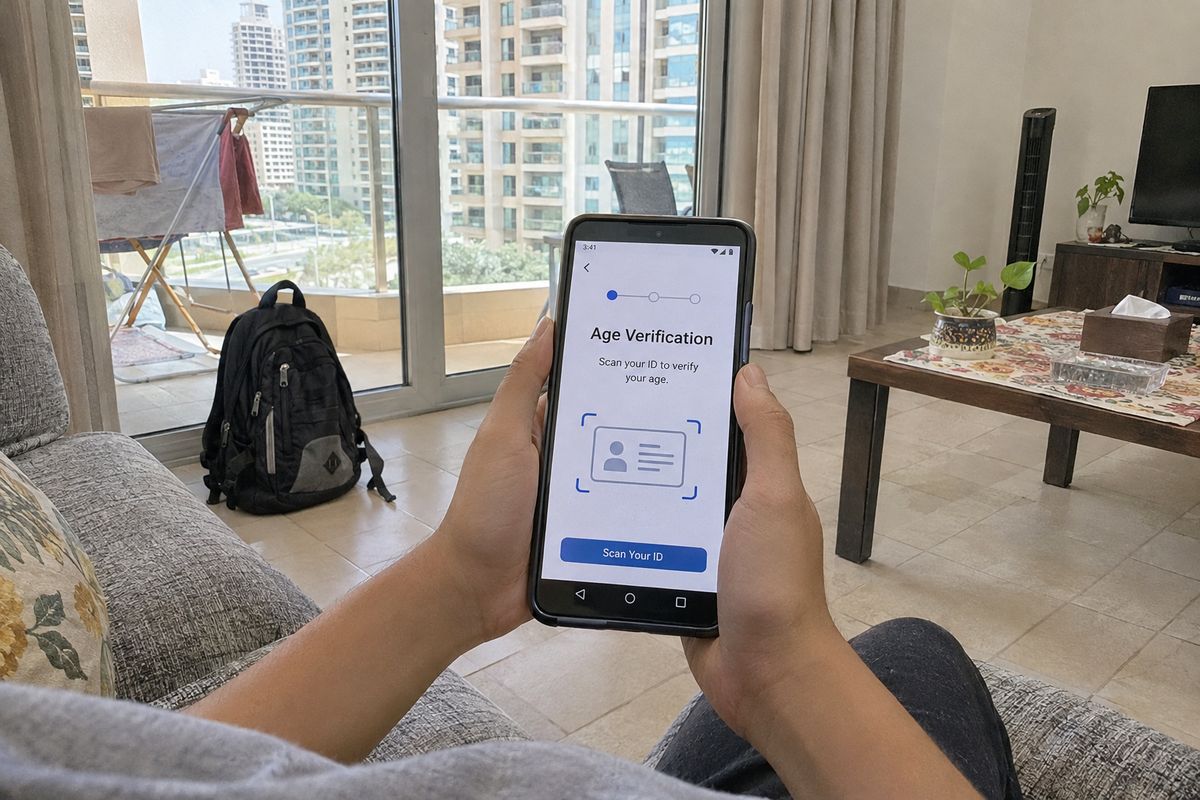
Cabinet Resolution No. 106 of 2026 bars children under 15 from creating, using or operating a personal social media account (Article 3(1)). Children aged 15 but not yet 16 may have accounts only with special restrictions (Article 3(3)–(4)). It covers every platform available in the UAE or directed at users there, wherever the provider is established (Articles 1 and 2). Age must be verified by an approved method; self-declaration does not count (Article 4(3)), and parental consent is no exception (Article 3(5)). The Resolution took effect on 30 June 2026, and platforms have 12 months from that date to comply (Article 8).
Who is covered
A "social media platform" is any platform that lets users create public or semi-public accounts or profiles, facilitates social interaction, enables publishing or sharing content, or relies on algorithms or automated technologies to display, rank or recommend content, free or paid, regardless of the provider's place of establishment, business model, delivery channel or technical infrastructure (Article 1). The tests are alternatives: meeting one is enough. The Resolution applies to every such platform whose services are made available within the UAE or directed at users there (Article 2).
Definitions from Federal Decree by Law No. 26 of 2025 on Child Digital Safety also apply. Under it, a "Child" is anyone who has not completed 18 Gregorian years (Article 1).
The age rules: Article 3
| Age | Rule |
|---|---|
| Under 15 | No personal account. Platforms must block sign-up and must not open full features: social interaction, posting, commenting, sharing, public groups, open channels, large interactive spaces. |
| 15, not yet 16 | Account allowed, with restrictions suited to the age group (below). |
| 16 and 17 | No age-band restrictions in Article 3, but still Children: the ad-targeting ban in Article 5(4) and the Decree by Law apply. |
For 15-year-olds, platforms must:
- classify and restrict the content they can view or share, including Harmful Content;
- limit public sharing and interaction with users unknown to the child and caregiver;
- offer tools to set permitted hours and cap daily or night-time use, to standards the Child Digital Safety Council approves;
- provide clear parental controls over settings, privacy levels and features;
- restrict or disable high-risk features such as unrestricted private messaging, open live streaming and intensive algorithmic recommendation, or provide approved safe-design measures instead.
Consent by a caregiver or anyone else does not create an exception. A caregiver may adjust a 15-year-old's settings through the parental controls, but only within Article 3's limits (Article 3(5)).
Age verification: Article 4
- Methods: digital government identity, an official ID scan, or an official document with biometric matching; AI age estimation, including biometrics; approved and licensed age verification providers in the UAE; or other methods the Council approves (Article 4(2)).
- Standards: high accuracy against circumvention; minimum data; biometric data and official documents kept only as long as verification needs; no unjustified exclusion of user groups; able to integrate with approved national systems on request; auditable by the Telecommunications and Digital Government Regulatory Authority (TDRA); clear user information (Article 4(1)).
- Self-declared age is not recognised, nor is any unapproved method (Article 4(3)).
Other platform obligations: Article 5
- Detect under-age accounts and suspend or disable them immediately; take reasonable measures against circumvention.
- No targeted advertising to children based on tracking or behavioural profiling, and no commercial use of their tracked data. Contextual ads without profiling, and processing needed for child safety, are allowed.
- Build awareness tools into the interface, run periodic child-safety risk assessments and report periodically to the authorities.
Caregivers must not help a child get around age verification or give false data (Article 6).
Transition, enforcement and penalties
- Dates: issued 17 June 2026, published in Official Gazette No. 826 on 29 June 2026, in force the next day, 30 June 2026 (Article 9).
- Transition: 12 months from entry into force (Article 8(1)), so it runs to the end of June 2027. The text does not say whether 30 June 2026 itself counts; treat 29 June 2027 as the last safe day. TDRA may work with platforms on readiness meanwhile (Article 8(2)).
- Enforcers: the National Media Authority for content-related obligations and TDRA for technical ones. Each may warn, order closure or partial or total blocking, or impose other administrative penalties from the list issued under the Decree by Law, applied gradually. Both report to the Child Digital Safety Council, which can issue guidance and technical requirements (Article 7).
- Fine amounts are not in the Resolution. Article 16 of the Decree by Law leaves the penalties, the authorities that impose them and grievance routes to a Cabinet regulation. On 18 November 2026 the portal did not link any such regulation to the Decree by Law.
Sources
Questions
Does it apply to a platform with no UAE presence?
Yes, if its services are available in the UAE or directed at users there, wherever it is established (Articles 1 and 2).
Can a parent consent to a 14-year-old's account?
No. Consent by a caregiver or anyone else is not an exception (Article 3(5)).
Is a date-of-birth field enough?
No. Self-declaration is not recognised; use an approved method meeting Article 4(1).
When must platforms comply?
The 12-month transition runs from 30 June 2026 (Article 8). Plan to comply by 29 June 2027.
How we researched this: on 18 November 2026 we read the English texts of Cabinet Resolution No. 106 of 2026 and Federal Decree by Law No. 26 of 2025 on Child Digital Safety on the UAE Legislation portal, with the dates the portal shows, and checked its related-legislation list for a penalties regulation. We cross-checked with the AlQuanun research agent. These are English versions; the Arabic text prevails. The transition end date is our own calculation. This is a general explanation, not legal advice for a specific platform.